
Scientists have confirmed that Amazon and Starlink satellites are interfering with space exploration
A new study confirms that Amazon Leo satellites, like previously launched Starlink satellites, are exceeding recommended brightness levels, causing interference with ground-based telescopes.

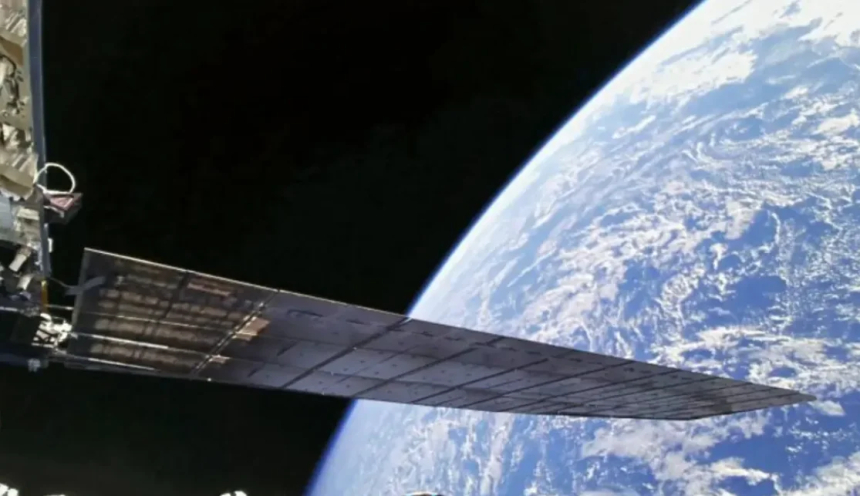
A group of scientists has found that Amazon's new Leo satellite constellation, designed to provide internet services, could have a significant impact on astronomical observations. These findings echo previously documented effects of SpaceX's Starlink satellites, which have regularly left traces in astronomical images since 2019.
Amazon Leo satellites expand the number of satellites in low Earth orbit. The company currently has approximately 180 operational satellites, with long-term plans to deploy a constellation of over 3,200.
According to the study, an analysis of approximately 2,000 observations revealed that the brightness of these satellites exceeds the thresholds recommended by the International Astronomical Union for maintaining observing conditions. Their average apparent magnitude is 6.28, which interferes with the operation of professional telescopes.
The study's authors point out that while Amazon satellites are, on average, slightly dimmer than Starlink satellites, some future Amazon satellites are planned to be placed in lower orbits—approximately 590 kilometers. This could increase their apparent brightness. Furthermore, the Starlink constellation spends a significant amount of time in Earth's shadow, reducing its influence.
The problem extends beyond ground-based optical astronomy. Earlier, in 2022, NASA representatives noted that dense satellite constellations could complicate the detection of potentially hazardous objects such as asteroids.
Companies including SpaceX and Amazon are working to reduce the visibility of their satellites. Meanwhile, some in the scientific community believe that preserving conditions for astronomical research may require limiting the number of spacecraft in orbit. As experts noted, this issue requires broad discussion, as the sky is a shared resource for scientific research, communications, and other services.
Share
What's Your Reaction?
 Like
0
Like
0
 Dislike
0
Dislike
0
 Love
0
Love
0
 Funny
0
Funny
0
 Angry
0
Angry
0
 Sad
0
Sad
0
 Wow
0
Wow
0





![Transfer/ Postings Senior Superintendent Police Hyderabad [Notifications]](https://pakweb.pro/uploads/images/202402/image_100x75_65d7bb0f85d5f.jpg)
![Amazing Text Animation Effect In CSS - [CODE]](https://pakweb.pro/uploads/images/202402/image_100x75_65d79dabc193a.jpg)






![Simple Weather App in HTML [CODE]](https://pakweb.pro/uploads/images/202509/img_w500_68d7a9fc4d3674-38765562.jpg)