
A 3D-printed earthquake-resistant two-story house has been built in Japan.
Japan has completed construction of its first two-story 3D- printed house, which has received official government approval. This milestone is particularly significant, as the country has some of the most stringent earthquake-resistant building requirements in the world.

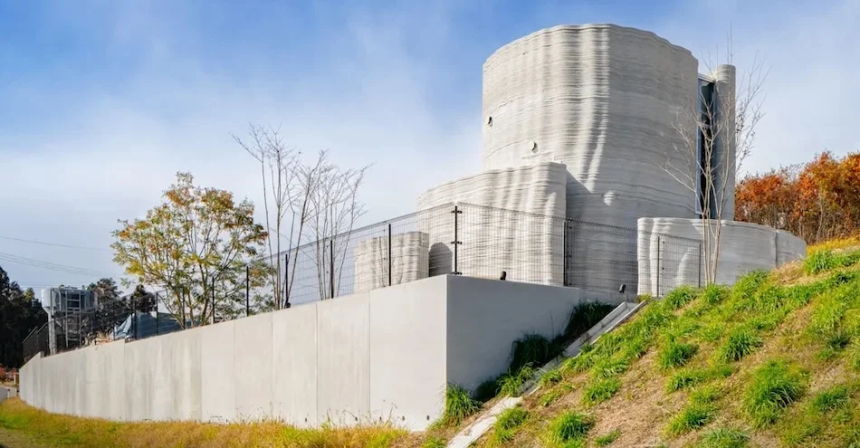
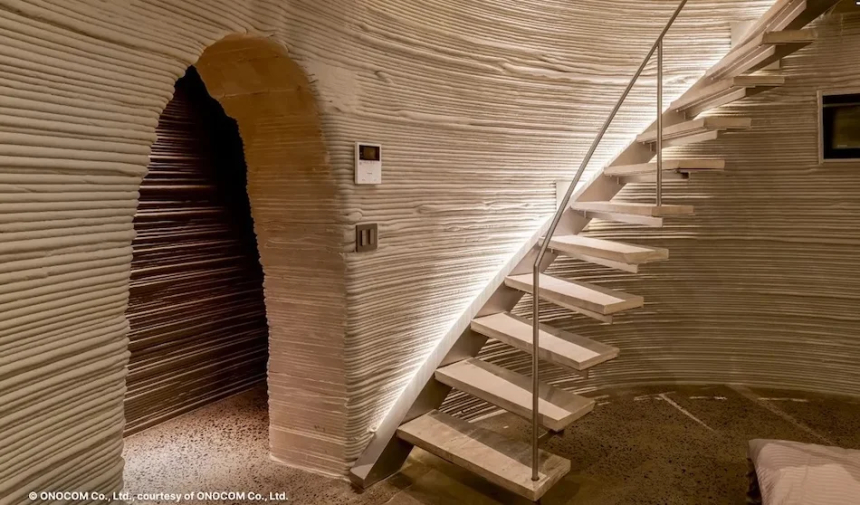
To create this structure in the city of Kurihara, a 3D printing system from the Danish company COBOD, which positions itself as a world leader in construction 3D printing, was used. The Japanese firm Kizuki Co., Ltd. served as the direct contractor, and the architectural firm Onocom developed the design. The building's exterior is described as "cave-like."
According to COBOD CEO Henrik Lund-Nielsen, the project demonstrates that 3D printing reinforced concrete technology is ready for use in seismic zones, ensuring the necessary structural accuracy and consistent quality that meets strict standards.
It is noted that 3D printing in construction was previously limited to small or single-story projects. The successful construction of a fully functional two-story house marked a significant step forward. The construction utilized multifunctional wall panels, printed as a three-layer structure that integrated the design, supporting frame, and interior space, reducing the need for on-site modifications.
Other advantages of the technology include the elimination of traditional formwork, reduced logistics costs and CO2 emissions, freedom of architectural forms, consistent quality control, and accelerated construction rates.
The project also confirmed the technology's resilience to temperature fluctuations: printing began at temperatures below 10 degrees Celsius, when heated water was required, and was completed in the summer at 30–35 degrees Celsius. The intense heat complicated process control but did not result in any construction interruptions or disruptions.
Share
What's Your Reaction?
 Like
0
Like
0
 Dislike
0
Dislike
0
 Love
0
Love
0
 Funny
0
Funny
0
 Angry
0
Angry
0
 Sad
0
Sad
0
 Wow
0
Wow
0





![Transfer/ Postings Senior Superintendent Police Hyderabad [Notifications]](https://pakweb.pro/uploads/images/202402/image_100x75_65d7bb0f85d5f.jpg)
![Amazing Text Animation Effect In CSS - [CODE]](https://pakweb.pro/uploads/images/202402/image_100x75_65d79dabc193a.jpg)