
NASA plans to place a nuclear reactor on the Moon by 2030
NASA plans to place a 500-kilowatt nuclear reactor on the Moon by the end of 2030. The project is being developed as part of the Surface Fission Energy Initiative and is more powerful than the radioisotope generators used on previous missions.

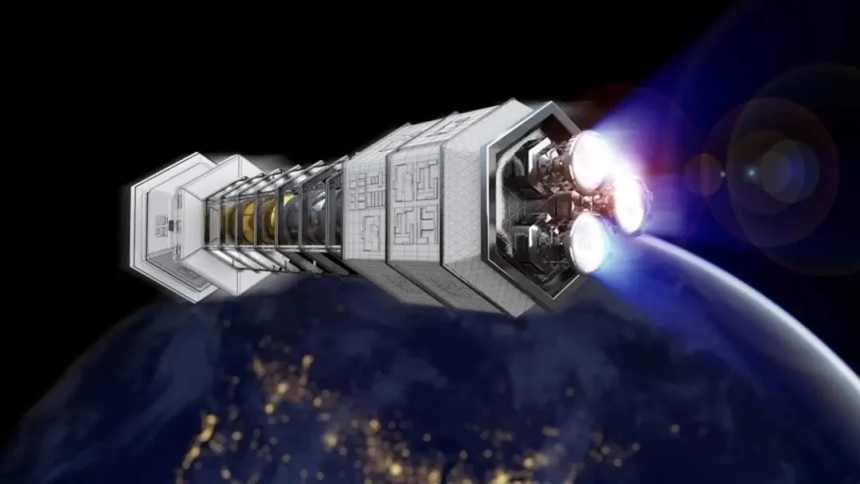
The reactor is designed to power lunar bases, industrial equipment, communications systems, and mining facilities. Nuclear reactors are not currently used in space. NASA has issued a directive for the terrestrial use of nuclear energy and plans to place a reactor on the Moon by 2030.
The strategy is outlined in a report prepared with support from the Idaho National Laboratory. Three options are being considered: the development of a 100-500-kilowatt reactor under NASA leadership, the development of two systems under 100 kilowatts as part of a public-private partnership, or the creation of a radioisotope system under one kilowatt to test the regulatory framework.
Space nuclear systems differ from terrestrial systems in their operating conditions. The main differences concern the mass, temperature conditions, and durability of components. The equipment must be light enough to be launched by a launch vehicle, yet resistant to temperature fluctuations, radiation exposure, and micrometeorite impacts. Using water as a coolant is considered difficult due to the need for massive, high-pressure vessels. NASA is exploring alternative high-temperature cooling systems to reduce reactor mass and increase power density.
Share
What's Your Reaction?
 Like
0
Like
0
 Dislike
0
Dislike
0
 Love
0
Love
0
 Funny
0
Funny
0
 Angry
0
Angry
0
 Sad
0
Sad
0
 Wow
0
Wow
0




![Transfer/ Postings Senior Superintendent Police Hyderabad [Notifications]](https://pakweb.pro/uploads/images/202402/image_100x75_65d7bb0f85d5f.jpg)
![Amazing Text Animation Effect In CSS - [CODE]](https://pakweb.pro/uploads/images/202402/image_100x75_65d79dabc193a.jpg)